Introduction to Using GeckoDriver in Docker Containers
Docker containers are lightweight, portable environments that package applications and their dependencies together. When automated browser testing is part of your CI/CD pipeline, containerizing your browser runtime and drivers can dramatically improve reliability and reproducibility. However, running GeckoDriver inside Docker requires careful setup to ensure compatibility with Firefox, handle dependencies, and optimize performance for Selenium tests in headless mode.
With a container‑safe approach, teams significantly reduce version mismatches, eliminate environment inconsistencies, and improve the overall test execution success rate. This makes your automation setup more robust and scalable.
What Is GeckoDriver and Its Role in Docker‑Based Automation
GeckoDriver acts as the intermediary between your Selenium WebDriver scripts and the Firefox browser. It translates WebDriver commands into actions the browser can execute. Without GeckoDriver, Selenium cannot control Firefox, especially in automated pipelines.
Common Issues with GeckoDriver in Docker Environments
Running GeckoDriver in a containerized environment introduces unique challenges:
- Browser and driver version incompatibilities
- Missing dependencies like shared libraries required by Firefox
- Headless mode configuration issues
- Incorrect PATH or permission conflicts
A container‑safe setup anticipates these challenges, ensuring smoother execution.
Why Version Compatibility Matters for Containerized Testing
Each Firefox release may require a matching GeckoDriver version. Docker images that don’t automatically synchronize versions are prone to test failures and broken builds. Automating compatibility checks helps maintain reliable test runs.
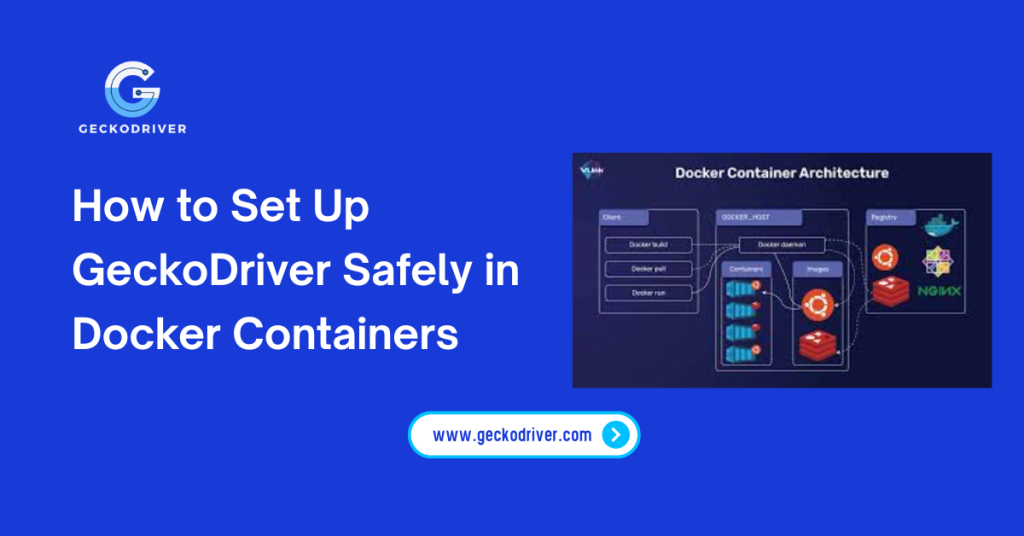
How to Set Up GeckoDriver Safely in Docker Containers
Achieving a container‑safe GeckoDriver setup begins with choosing the right base image and configuring dependencies. Below are best practices for a secure and reliable Docker configuration.
Choosing the Right Base Image for Firefox and GeckoDriver
Selecting an official or well‑maintained base image reduces the risk of missing libraries or broken dependencies. Popular choices include images that already bundle Firefox and Xvfb for headless operation.
Installing GeckoDriver in Docker: Step‑by‑Step Approach
- Start from a stable Linux base image (e.g., Ubuntu or Debian).
- Install Firefox using package managers or prebuilt binaries.
- Download the latest compatible GeckoDriver binary from official sources.
- Extract and place GeckoDriver in the PATH for system‑wide access.
Sample Docker instructions ensure consistent installations and reduce environment drift.
Ensuring Container Isolation and Security During Installation
Container isolation ensures that your test environment behaves predictably, without interfering with host machine configurations. Use non‑root users and minimal base images to enhance container security.
Verifying GeckoDriver Version Inside the Container
Always verify the driver version after installation using a simple command like geckodriver --version. This helps catch mismatches early and ensures that Firefox and GeckoDriver remain compatible.
Best Practices for Running Selenium Tests with GeckoDriver in Containers
To make your Docker‑based test environment truly container‑safe and production‑ready, apply the following strategies:
Optimizing Container Performance for Automated Tests
Use lightweight images and reduce unnecessary layers. This results in faster image builds and quicker test execution.
Handling Dependencies and Libraries Required by GeckoDriver
Firefox and GeckoDriver often require shared libraries that aren’t included in the minimal base images. Ensure these are included in your Dockerfile to avoid runtime errors libX11 and libGL missing files.
Logging and Debugging GeckoDriver in Docker Containers
Enable log outputs from both Selenium and GeckoDriver. Logs help troubleshoot issues like session timeouts or browser startup failures:
- Persist logs to mounted volumes
- Use verbose GeckoDriver logging flags
Maintaining Consistent GeckoDriver Versions Across Environments
Consistency is key in automated testing. Lock driver versions in your Docker setup or automate version checks to avoid divergent behaviors between local and CI environments.
Advanced Container‑Safe Techniques for GeckoDriver Automation
For teams using CI/CD pipelines, advanced strategies ensure maximum stability and repeatability.
Automating GeckoDriver Updates in Docker Builds
Embed version checks and downloads in your Docker build process so that every container has the latest supported driver.
Using Lightweight Containers for Faster Test Execution
Slim down your images using multi‑stage builds and lightweight bases like Alpine Linux, where possible, bearing in mind compatibility considerations.
Integrating GeckoDriver with CI/CD Pipelines in Docker
Whether you use GitHub Actions, GitLab CI, CircleCI, or Jenkins, you can run your Docker containers as part of your pipeline. This boosts continuous testing automation and reduces “works on my machine” scenarios.
Managing Cross‑Browser Testing Inside Containers
If your automation needs both ChromeDriver and GeckoDriver, consider orchestrating multiple containers to run parallel cross‑browser tests.
Troubleshooting Common GeckoDriver Issues in Docker
Even with a container‑safe setup, issues can arise. Here are fixes to frequent problems:
Fixing Display and Headless Browser Errors
In headless mode, many setups require Xvfb or similar virtual display servers. Without them, Firefox fails to launch.
Handling Permission and PATH Issues in Containerized Setup
Ensure that GeckoDriver is executable and available in the PATH. Use chmod +x and export the correct PATH in your Dockerfile.
Resolving Version Mismatches Between GeckoDriver and Firefox
Lock versions or implement automated compatibility checks in your Docker build process to avoid mismatches that break tests.
FAQ Section on Using GeckoDriver in Docker
How do I safely install GeckoDriver in a Docker container?
Install Firefox first, then download the compatible GeckoDriver binary and add it to the system PATH within the Docker image.
Can I run multiple Firefox versions in Docker using GeckoDriver?
Yes by creating separate container images for each version and using appropriate driver versioning logic.
What base image is best for GeckoDriver container setups?
Use images that support GUI dependencies, such as Ubuntu or Debian, or preconfigured testing images with Firefox installed.
How do I automate GeckoDriver updates inside Docker builds?
Embed update scripts into your Dockerfile that check and download the latest compatible GeckoDriver during build.
Why do Selenium tests fail with GeckoDriver in Docker?
Failures often result from version mismatches, missing libraries, or misconfigured headless mode.
How can I debug GeckoDriver issues in a headless container?
Enable verbose logs for Selenium and GeckoDriver, and save logs to mounted volumes for inspection.
Is it safe to use GeckoDriver in production CI/CD Docker pipelines?
Yes. With proper version control and container isolation, Docker provides a safe environment for automated browser testing.
How do I maintain consistent GeckoDriver versions across containers?
Use version locking and automated version checks to ensure containers always use the intended GeckoDriver version.
Conclusion: Achieving Container‑Safe GeckoDriver Automation
Running GeckoDriver in Docker containers is a powerful approach for scalable, consistent automated testing. A container‑safe setup minimizes environmental discrepancies, reduces test failures, and enhances your CI/CD test-automation workflow. By following best practices, including secure GeckoDriver installation, dependency management, and automated version control, you can build reliable, repeatable testing environments that scale across teams and pipelines. Containerizing GeckoDriver not only improves test reliability but also accelerates delivery cycles in today’s fast‑paced DevOps culture.
Latest Post: